Out-Lynching Lynch: David Lynch, Kirk Mellecker, Surrealism, and the Black Dahlia
May 6, 2026
Birch Bay, Washingon
Last night I finally watched David Lynch’s The Straight Story (1999), a film recommended to me recently in conversation. At age 84, watching Richard Farnsworth portray Alvin Straight calling himself “an old man” at 73 gave me pause. Farnsworth himself was nearing 80 during filming and already seriously ill. It also made me feel pretty good about still being upright, functioning, writing, researching, and fixing breakfast for myself and my little beastie, Rima, being nearly twelve years beyond the age Alvin Straight considered old.
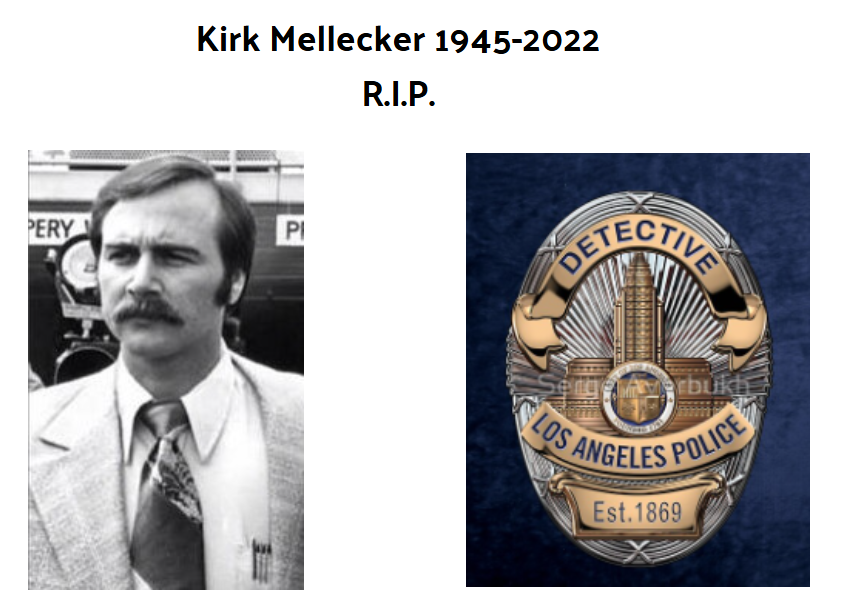
I’d rate the film about a 7 out of 10. I was never a huge Lynch fan, though I greatly admired The Elephant Man. Still, watching The Straight Story unexpectedly brought me back toward thoughts of Lynch’s longtime fascination with the Black Dahlia case and eventually toward memories of my old LAPD partner, Det. III Kirk Mellecker.
Back in 2019, I wrote about Lynch’s reported dinner conversation at Musso & Frank Grill with former LAPD detective John “Jigsaw John” St. John, where Lynch claimed St. John showed him an unpublished nighttime photograph of Elizabeth Short’s body at the crime scene. At the time, I found the anecdote intriguing, particularly given Lynch’s lifelong fascination with dark undercurrents beneath the polished surfaces of Los Angeles and Hollywood.
But in the years since, and especially after the passing of Kirk Mellecker in 2022, I’ve reflected more carefully on that story and on the mythology that has grown around the Dahlia investigation itself.
Kirk made something very clear to me during our many conversations over the years: no such crime-scene photograph existed in the official Black Dahlia investigative files.
More importantly, Kirk also made clear that despite the mythology surrounding “Jigsaw John,” St. John was never truly part of the Dahlia investigation itself and had never worked the original file in any meaningful operational sense. Kirk, who spent sixteen years, as the sole detective assigned to the case — the longest of any LAPD investigator — regarded the Dahlia investigation as his responsibility and knew those files intimately.
To be candid, by the later years of his life, St. John’s once-formidable reputation had outlived the reality. He struggled heavily with alcohol and, while undoubtedly talented in his prime, was no longer the sharp investigator the public imagined him to be.
So was Lynch’s story fabricated?
Possibly. Or perhaps more accurately: transformed by memory, mythmaking, alcohol, Hollywood fascination, and the strange gravitational pull the Dahlia case has always exerted over Los Angeles imagination.
Yet oddly enough, I now suspect there may have been a hidden truth buried underneath the story all along.
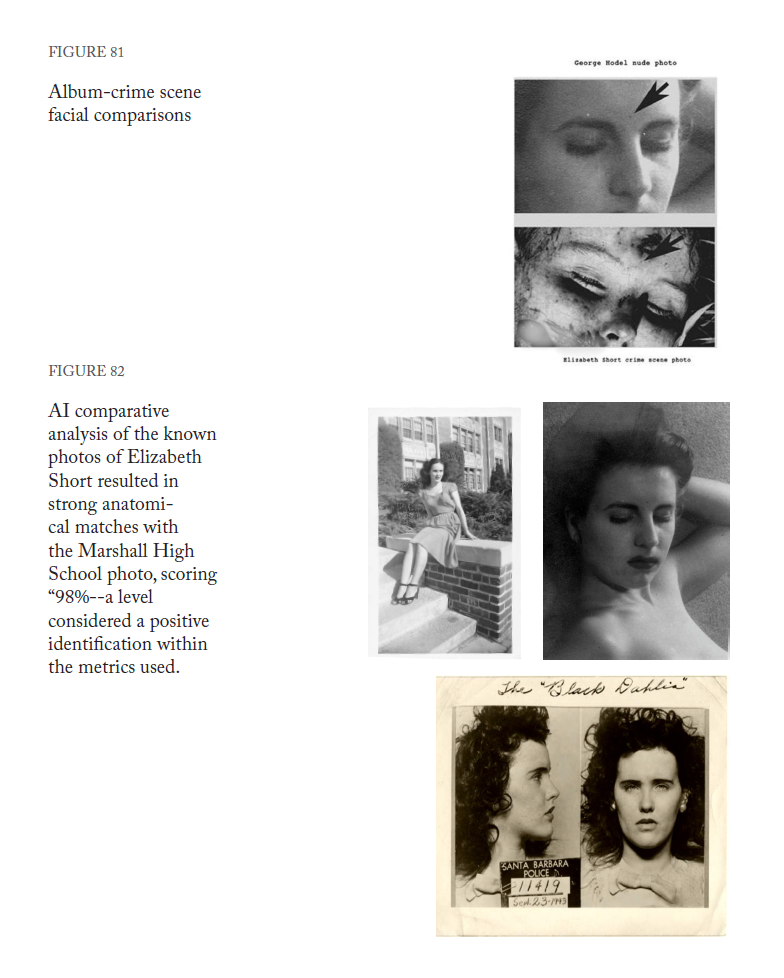
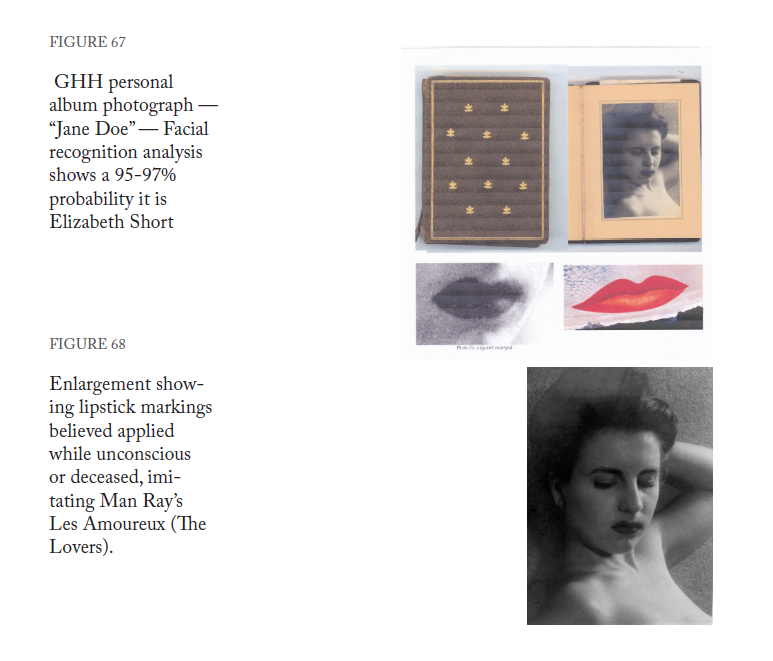
If I am correct — and after years of comparative analysis I believe I am — the killer did indeed photograph Elizabeth Short either unconscious or shortly after death, preserving the image privately as both trophy and documentation of his work.
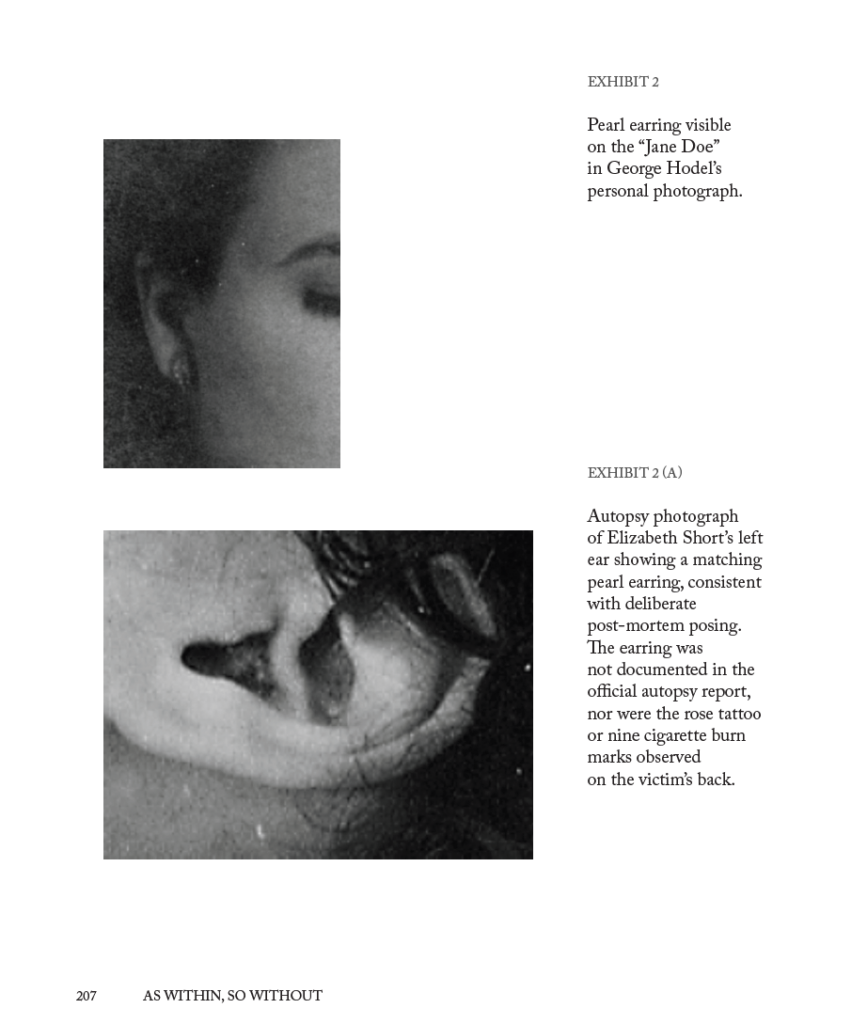
Facial recognition analysis conducted over the years has shown a 97–99% positive correlation to known photographs of Short, further supported by earring corroboration and lipstick comparison analysis.
That distinction matters enormously.
Such a photograph would not represent ordinary crime-scene documentation. It would represent possession, authorship, preservation — the killer curating his own work.
And this, in my view, fits perfectly with Dr. George Hill Hodel’s psychology.
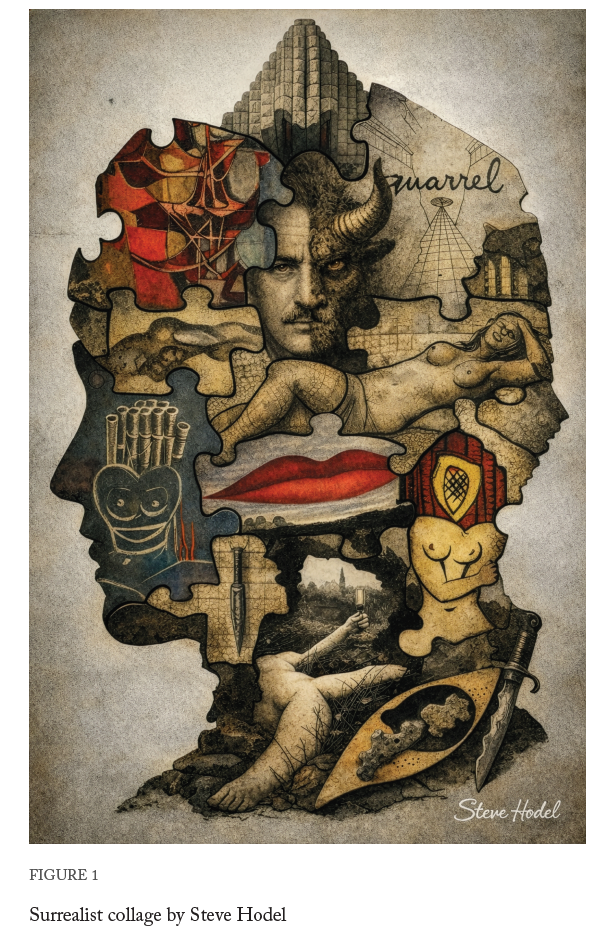
As I have argued for years, GHH was not simply a physician and sexual libertine. In his youth he aspired toward artistic and photographic circles, cultivated intellectual elitism, and moved within a milieu deeply influenced by Surrealist aesthetics and ideas. The Black Dahlia murder, viewed through that lens, ceases to resemble a conventional homicide and instead begins to appear as a deliberately composed work of symbolic violence.
The body was posed. The mutilation was controlled. The scene was arranged. The public display was theatrical.
Most murders are chaotic.
The Dahlia murder appears composed.
That is why, after all these years, I increasingly believe the real crime far out Lynches Lynch.
David Lynch spent a career creating dreamlike worlds where hidden darkness lurked beneath America’s clean surfaces. Yet the actual Black Dahlia case — particularly if understood through the prism of Surrealism, narcissism, artistic ritualization, and psychological staging — may be stranger and more disturbing than Lynch’s fictional nightmares ever were.
Ironically, Lynch may have sensed this intuitively even while repeating a story that was factually unreliable.
He understood that the Dahlia case belonged to a uniquely Los Angeles territory where: history blurs into mythology, memory into performance, and reality itself begins to feel dreamlike.
Now Lynch himself is gone, having died on January 16, 2025 — essentially on the anniversary of Elizabeth Short’s murder on January 15, 1947.
An eerie coincidence perhaps. But somehow fitting.
For decades Lynch circled the same psychic terrain: dead women, fractured identities, Hollywood corruption, sexual secrecy, and the darkness hidden beneath carefully maintained American illusions.
Yet the historical Black Dahlia case, I believe, ventured even farther into that darkness than fiction dared go.
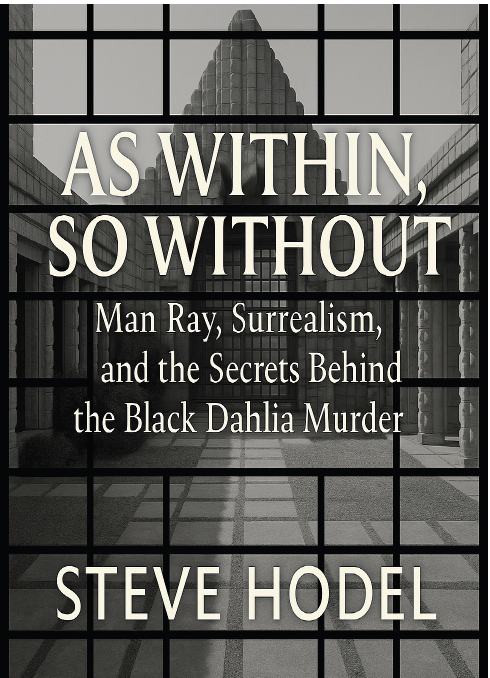
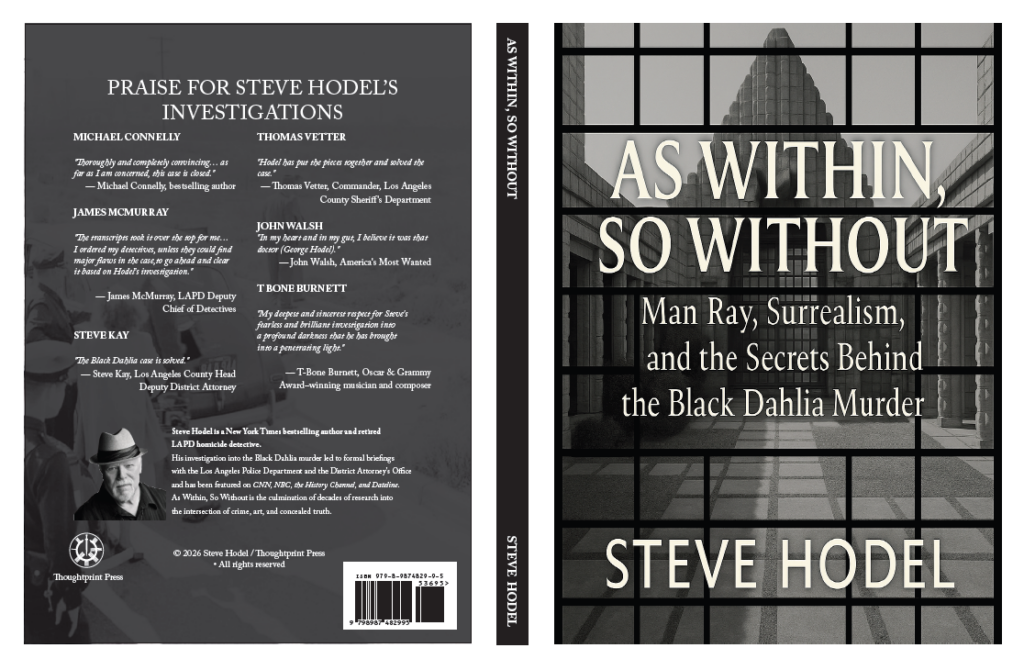
In As Within, So Without: Man Ray, Surrealism, and the Secrets Behind the Black Dahlia Murder (Thoughtprint Press, 2026), I further document my examination of evidence suggesting that several of George Hodel’s close Surrealist associates — including Man Ray, William Copley, and Marcel Duchamp — were aware, or strongly suspected, that GHH was Elizabeth Short’s killer, and later reflected that knowledge symbolically within aspects of their own artworks.
Whether viewed as encoded commentary, psychological leakage, private insider reference, or Surrealist confession-through-art, the pattern of imagery and symbolism explored in the book forms part of a larger argument that the Black Dahlia murder existed within a highly sophisticated artistic and intellectual milieu rather than the world of conventional homicide alone.
Many of the photographic, psychological, and Surrealist analyses referenced here are documented in As Within, So Without: Man Ray, Surrealism, and the Secrets Behind the Black Dahlia Murder (Thoughtprint Press, 2026), now available on Amazon.
The book examines how Surrealist aesthetics, symbolic staging, photographic ritualization, and psychological authorship may have intersected within the Black Dahlia crime itself — a reality which, in my view, ultimately “far out Lynches Lynch.”
And perhaps that is why the case still haunts us nearly eighty years later.
Graphics from As Within, So Without: Man Ray, Surrealism, and the Secrets Behind the Black Dahlia Murder:
I love the new collage.
When I first read about the case more than 50 years ago, my first impression was that the crime scene was some sort of perverse and sadistic art installation and your investigation has led to the same conclusion. Your comparison to the work of David Lynch is appropriate since many of the characters in his films share the same sort of cruelty, though not to such a depraved degree.
This new book may be the last word on the case. It comes full circle to the beginning of your investigation since the journey has been from one image to many images.
Your collage is interesting since all of the pieces look as if they belong to separate jigsaw puzzles yet somehow fit into a coherent work. To me it to me it mirrors how the different crimes can be pieced together. Well done.
Thanks Ron:
Yes, I see it as the final pieces being fit together to give us the surREAL picture of what he considered to be his “masterpiece.” At least for the time and place.
Best, Steve
I love your collage- you have a great deal of artistic as well as literary talent! I would love to buy and read AS WITHIN, SO WITHOUT, but wish a cheaper version were available in paperback or Kindle editions.
Yes hope to do a kindle version. So hang in there. Thanks for the kind words