Reflections on My 1972 Arrest of Rodney “Dating Game Killer” Alcala
May 20, 2026
Birch Bay, Washington
Reflections on My 1972 Arrest of Rodney “Dating Game Killer” Alcala

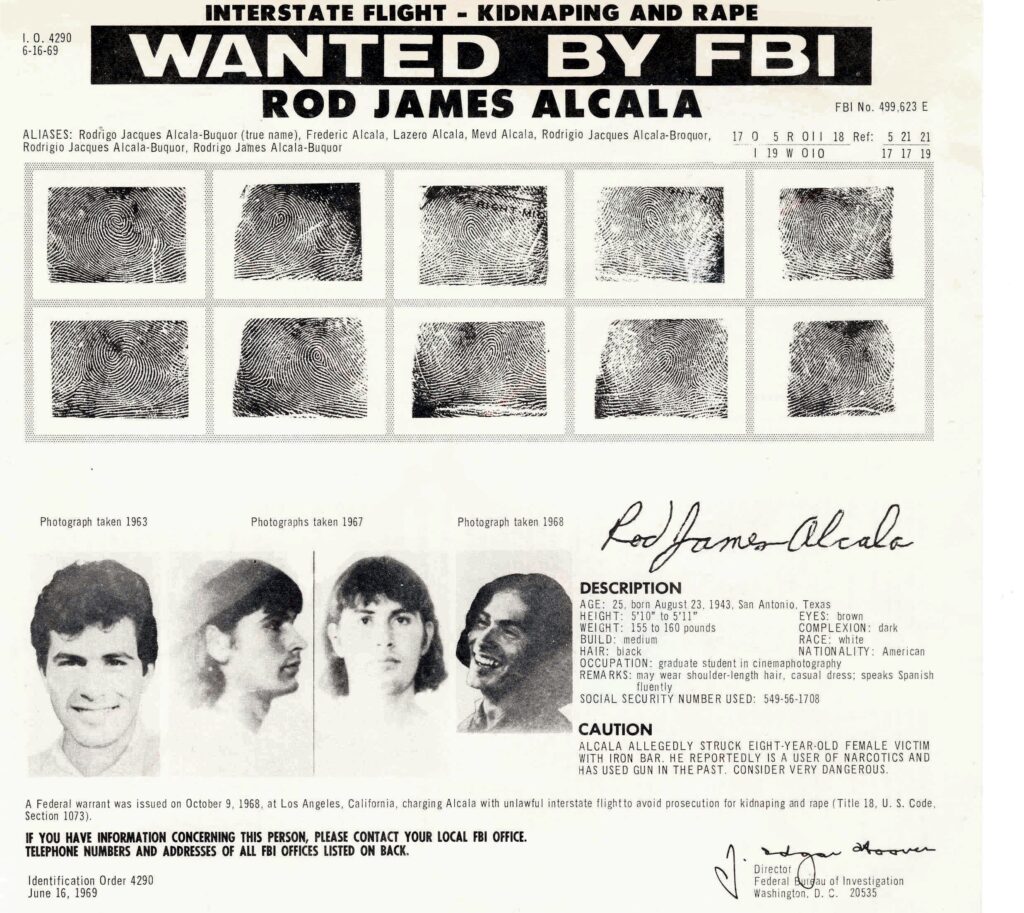
1968-Victim Tali Shapiro Dets Hodel/Fletcher “FBI Most Wanted” Arrest Warrant
Back in 1972, after my partner Sgt. Audrey Fletcher and I helped bring Rodney Alcala into custody for the kidnapping, rape, and attempted murder of eight-year-old Tali Shapiro, I believed society was finally safe from him.
We had obtained an arrest warrant, and I personally extradited him from the East Coast, and sent him to prison for the Hollywood rape/attempted murder crime he committed against 8-year-old, Tali Shapiro.
At the time, California operated under what was known as an indeterminate sentencing system. Alcala received a sentence of “1 to 99 years.” To investigators like myself, that meant he would likely spend decades behind bars. Given the brutality of the crime and Alcala’s obvious predatory behavior, I fully expected he would remain incarcerated for at least twenty years, if not longer.
But under the system then in place, prison psychiatrists and parole boards had enormous influence over how long violent offenders actually served. Once prison evaluators declared an inmate rehabilitated, early release became possible.
In Alcala’s case, one prison psychiatrist reportedly concluded he was “good to go.”
Less than three years later, Rodney Alcala was back on the streets.
Years afterward, the public would come to know him as the “Dating Game Killer,” linked to the murders of multiple young women across several states. Many of those deaths occurred after his release.
That fact has stayed with me for over fifty years.
The tragedy here is not that law enforcement failed to identify Alcala as dangerous. Detectives working the case recognized early on that we were dealing with an extremely violent sexual predator. The tragedy is that the criminal justice and psychiatric systems of that era still believed certain offenders could simply be rehabilitated and safely returned to society.
History proved otherwise.
In recent years, renewed public attention through documentaries and television specials has brought the Alcala case back into focus. I participated in several interviews discussing the original investigation and arrest, including the Tali Shapiro case and Alcala’s later release.
For readers interested in additional background and interview footage, the news video can be viewed here:
— Steve Hodel
LAPD Detective III Hollywood Homicide (ret.)
Fast forward this is still an issue with the parole board granting parole violation unrehabilitated ses offenders. There’s a yin and yang there are inmates that are truly working a program on rehabilitation that have the capacity to feel empathy and remorse after committing that sort of offense. These cases should be completely treated as individual as the inmates case warrants. Tge parole board doesn’t want to do their job.. If they release violent sex offenders it’s up to the senate and assembly ti rewrite laws…
You hit the nail on the head. Often psychologists and psychiatrists who are not familiar with psychopathy release dangerous offenders who become repeat offenders, sometimes committing worse crimes once they are released. I believe that prolonged observation of potential parolees by those same psychologists and psychiatrists for weeks or months might be a way to prevent psychopaths from being released on parole. That would work if the mental health field was not over worked with too many cases already. Sadly during these trying times, few qualified experts seem to be available to assess cases brought before parole boards.
I recall a case from California in the 1970s which gave criminologists the idea that the average child *** offender has on average 150 victims before they are caught. Apparently he was incarcerated for one offence but became a model prisoner who helped in the library and became part of the prison chaplaincy program or something to that effect. Those were enough to get him released after which he murdered a toddler after doing horrid things to the child. Apparently he was connected to at least 150 cases of assaults on children. I don’t remember the offender’s name, but I recall he was a well-groomed individual who looked like a trendy CEO for the time. Steve might recall the case.
In any event, I believe only professionals who have extensive experience with the offender or psychopathy should be allowed to rule on whether they get parole. And I also feel that a second panel equally qualified with the condition should carefully review the original panel’s decision before any extremely violent convict is potentially released.
In Germany rehabilitation of even the worst offender is law, it is a sort of ideology. Even in security detention – Sicherungsverwahrung- there is a duty to do therapy with them with the law saying by that should be avoided the security detention. It es called paragraph 66c of the criminal law code of Germany. Who is tricky wil be released though havin done several murders. The “art” is to tell the psychologists what they want to hear: Remorse, ability to interact with others and believing in the psychologist interpretation of the deed. Being a criminal myself, I was released after six years for murdering my father. Was in the eighties, but the system works until today. See my book linked in the twitter profile.