Actress Marya Marco, Screenwriter, Steve Fisher, and a Forgotten Thread in the Black Dahlia Timeline
January 5, 2026
Birch Bay, Washington
It was your father (George Hodel) who I have to thank for starting me in my career as an actress.”
— Marya Marco
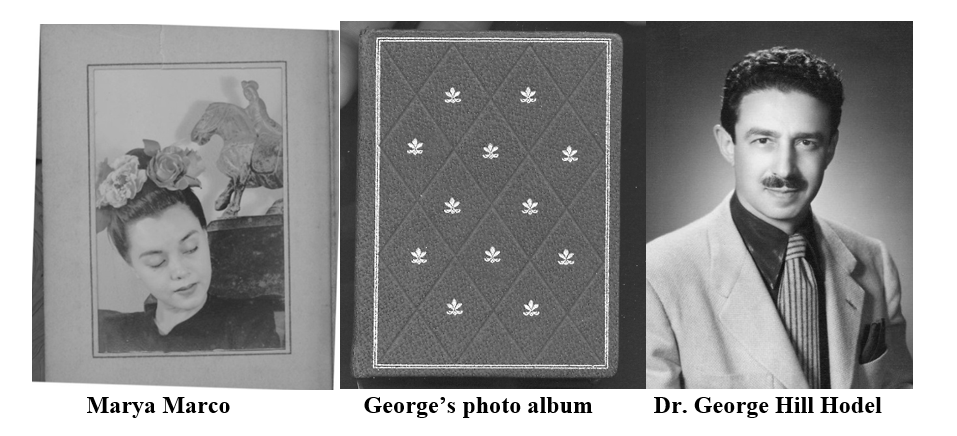
One of the responsibilities—of criminal investigation is knowing when to correct the record.
Years ago, while examining a photograph from my father’s personal album, I believed it might depict Elizabeth Short. I published it in my original Black Dahlia Avenger (Arcade 2003) as one of two photographs I suspected could be the victim, Elizabeth “Black Dahlia” Short. On that assumption in my ongoing investigation, I was able to prove myself wrong. After locating the woman in the photograph, meeting her personally, and hearing her story in her own words, in 2006, some twenty years ago, I eliminated her completely as being a suspected photograph of Elizabeth Short, known to the world as “The Black Dahlia.” That elimination was both in print and publicly on the television news show, Anderson Cooper 360, and I will repeat it here:

Author eliminating Marya Marco photo on CNN Anderson-360 twenty years ago in 2006
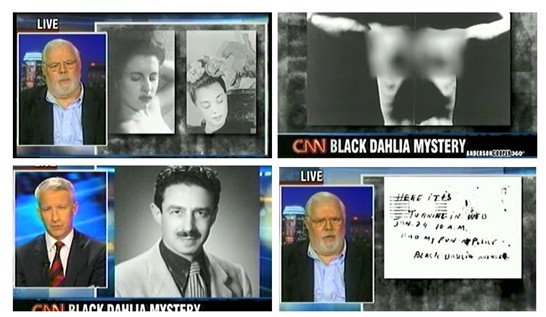
Marya Marco was not Elizabeth Short.
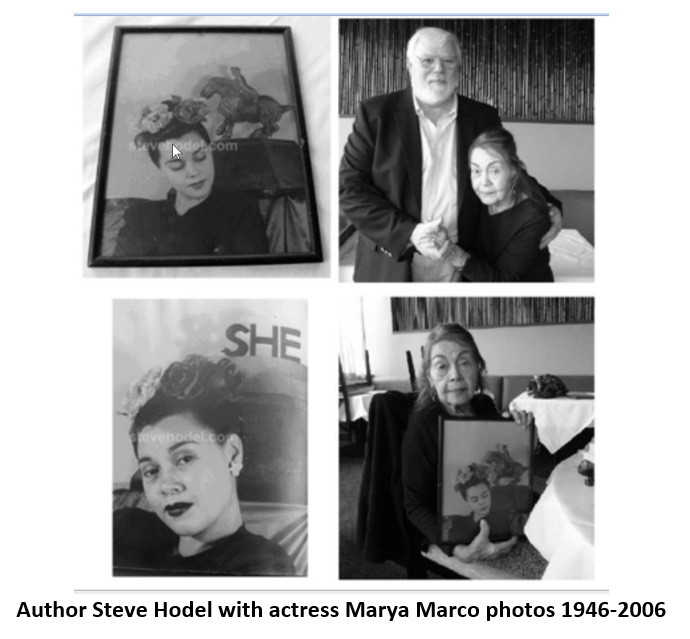
The photograph in question remains important—not because of what it is not, but because of what it is.
It comes from George Hodel’s own album. That alone gives it significance. The image clearly depicts a young actress later identified as Marya Marco, a working Hollywood performer in the late 1940s. This photograph should be viewed on its own, without juxtaposition against Elizabeth Short imagery—a comparison that is no longer relevant and only invites confusion.
The album photo establishes a verifiable social and professional intersection, nothing more, nothing less.
Who Was Marya Marco?
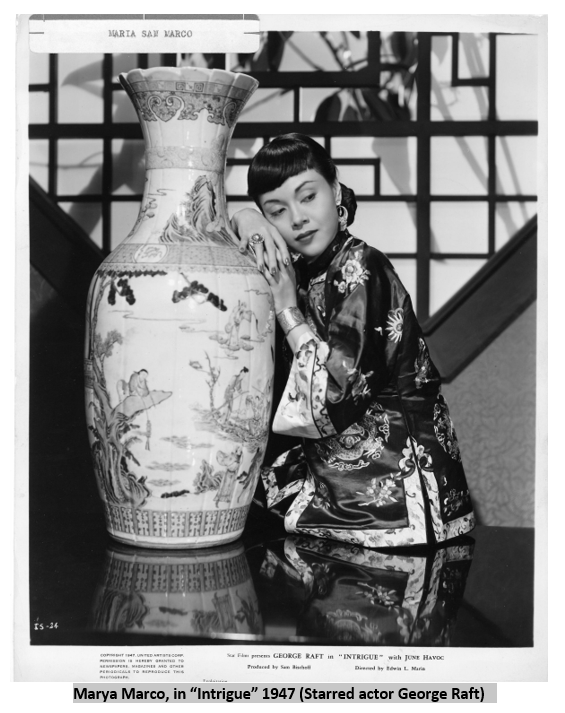
Marya Marco (also credited as Maria San Marco) was a legitimate actress working in Hollywood in the 1940s. The International Movie Data Base credits her with 21 films. Her first being, Song of the Thin Man (1947).
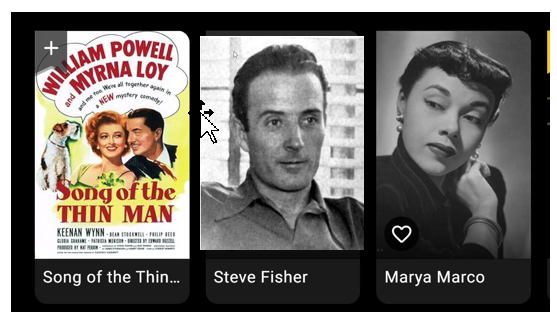
Song of the Thin Man was released in 1947, only months after Elizabeth Short’s murder. The screenplay was written by Steve Fisher, a rising Hollywood screenwriter at the time—who publicly stated, just days after the murder, alongside fellow screenwriter, Ben Hecht, that he knew the identity of the Black Dahlia killer.
Fisher’s words were not casual. In February 1947, he told reporters he expected the killer to be arrested imminently and made a curious, half-joking (?) remark that “he was leaving for Mexico to write a “new play” until that happened.”
That “new play” appears to have materialized two years later.
“Blood in the Streets” — Fisher’s Forgotten Stage Play
In July 1949, Steve Fisher’s stage drama Blood in the Streets premiered at the Coronet Theatre in Los Angeles. The production was widely promoted, and attended by major Hollywood figures, and heavily covered in the press.
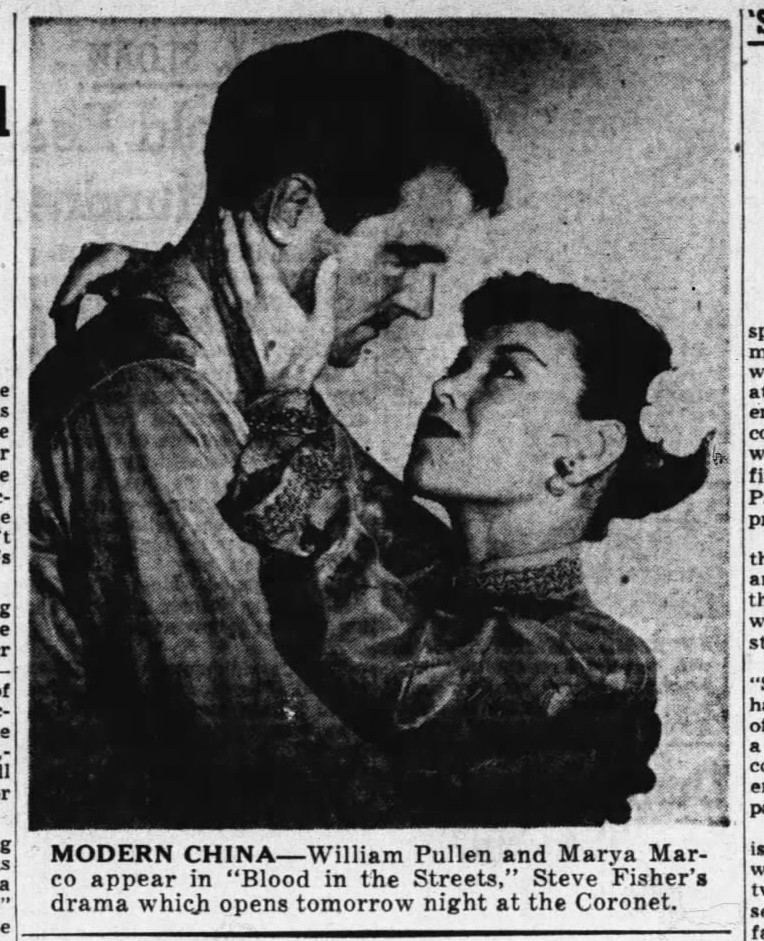

Citizen News July 13, 1949
Steve Fisher’s Stage Drama starring Marya Marco and William Pullen
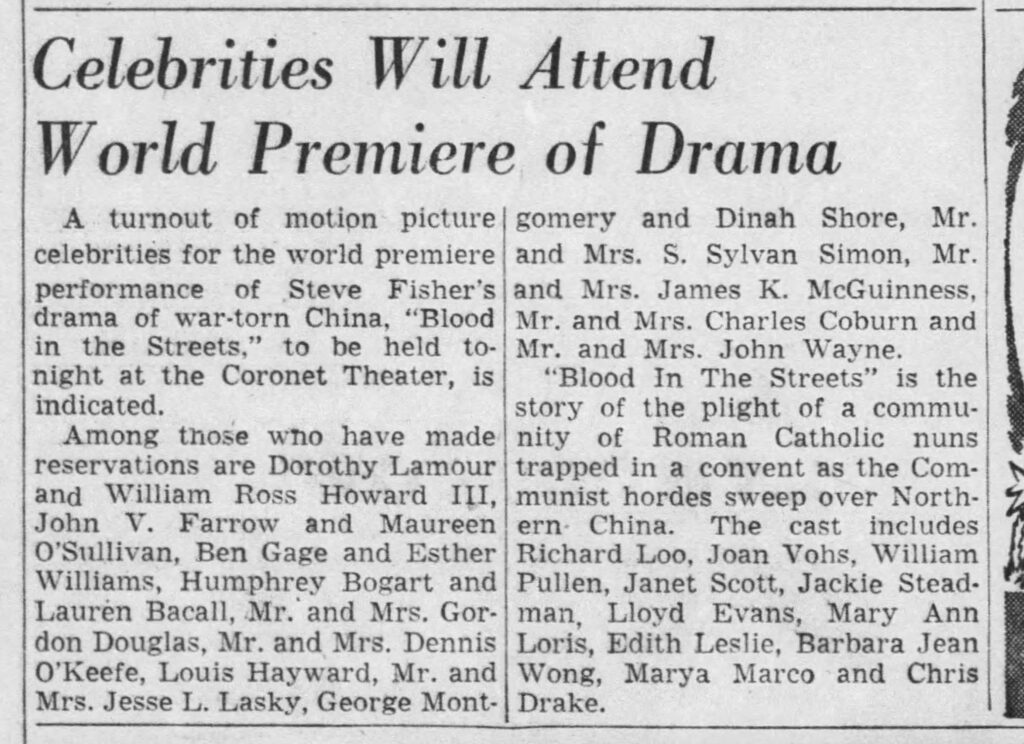
Author Note-
“Blood in the Streets” was attended by numerous Hollywood Celebrities of that day.
Interestingly, named as attending in the above article was film director, John V. Farrow and his wife, leading actress, Maureen O’Sullivan. John Farrow had just had, or was still having, an affair with another sometime tenant and friend of Dr. George Hodel.
Her name-Lillian Lenorak, another parttime actress, who in a 1950 incident with George Hodel, at the Sowden House, in the presence of her young son, John (age 4, and fathered by film Director John Farrow Sr.) would be assaulted, drugged and a staged “attempt suicide” with Dr. Hodel lightly cutting her wrists and bandaging them, while she was unconscious.
All documented in a later letter written by a Santa Barbara policewoman, Mary Unkefer as summarized in the secret, LA DA Hodel Black Dahlia Records.
Marya Marco appeared in “Blood in the Streets” and had a leading role in that stage production.
The play itself—set in wartime China—was harshly panned by critics, but its existence is undisputed. It was Fisher’s project, Fisher’s theme, Fisher’s world. And Marco’s presence places her again within Fisher’s professional orbit.
Importantly, the production followed on the heels of Fisher’s Black Dahlia commentary—commentary in which he repeatedly emphasized the psychology of the killer, the desire for recognition, and the theatrical nature of the crime, and even going so far as surggesting, “how to catch him” by suggesting the press and police stage a false confessor to bring the real killer forward to claim the crime.
After meeting Marya Marco personally and interviewing her at length, I came away convinced that there was no intimate relationship between her and my father. She was not “another girlfriend.” Their association was not personal, but rather professional, with George offering to introduce her to his “Hollywood Connections” which obviously, within a year or less after the photos were taken, became reality.
I now forget the actual source of my copying the below sketch. I believe it likely was on Ebay many years ago, but am not totally positive The sketch of Marya Marco was done by famed Hollywood Artist Herbert Ryder, signed, “To Marya Marco, With Best Wishes for a great future.”
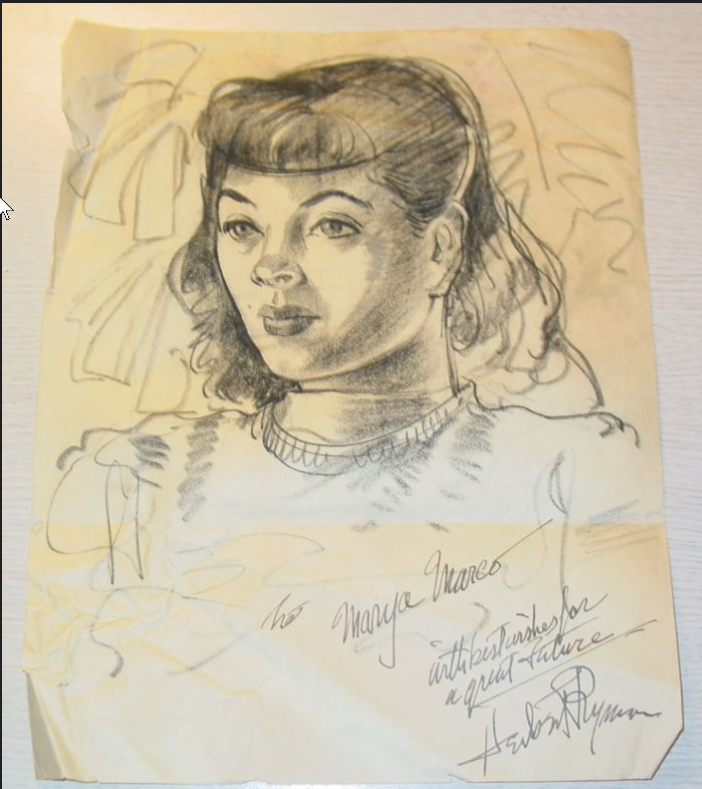
A Note on the Artist
The portrait of Marya Marco was drawn by Herbert Ryman, a major figure in mid-20th-century American art and design. Ryman was not a casual sketch artist or fan illustrator. He was a respected Hollywood portraitist and, later, one of the principal concept artists responsible for the original visual design of Disneyland, including Sleeping Beauty Castle and Main Street, U.S.A.
His portrait drawings were typically done from life and were often commissioned or gifted within professional creative circles. The existence of a signed Ryman sketch of Marco—inscribed with wishes for “a great future”—places her squarely within that world and reinforces the conclusion that she was seen at the time as a legitimate Hollywood prospect, not a peripheral or anonymous figure.
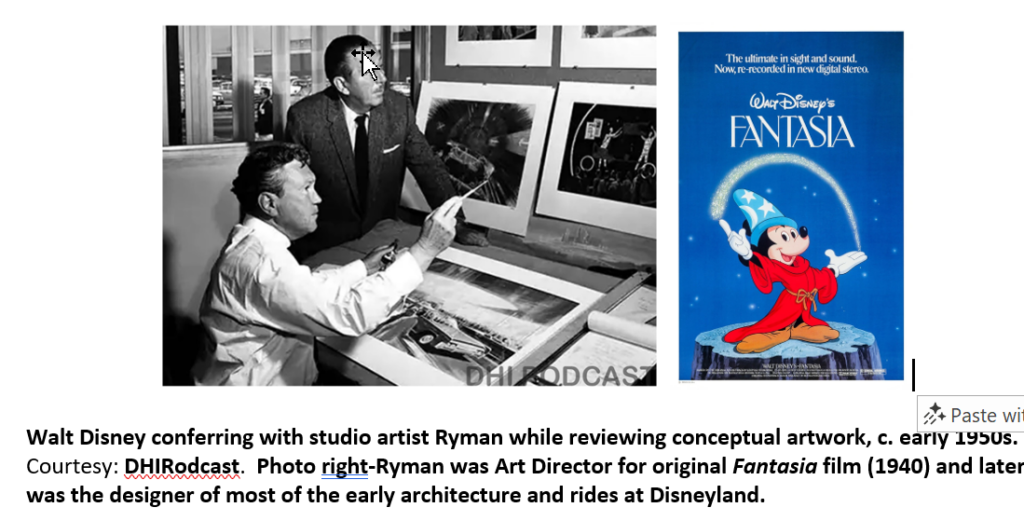
“Fantasia (1942). was not a typical animated film for its time—it was music-driven, abstract, and often dark, and it reflected the same imaginative current that ran through much mid-century Hollywood art, and was a favorite of my father, George Hodel.
(For readers interested in Ryman’s extraordinary career, his biography is well documented and available here):
Artist Herbert Ryman (1910-1998)
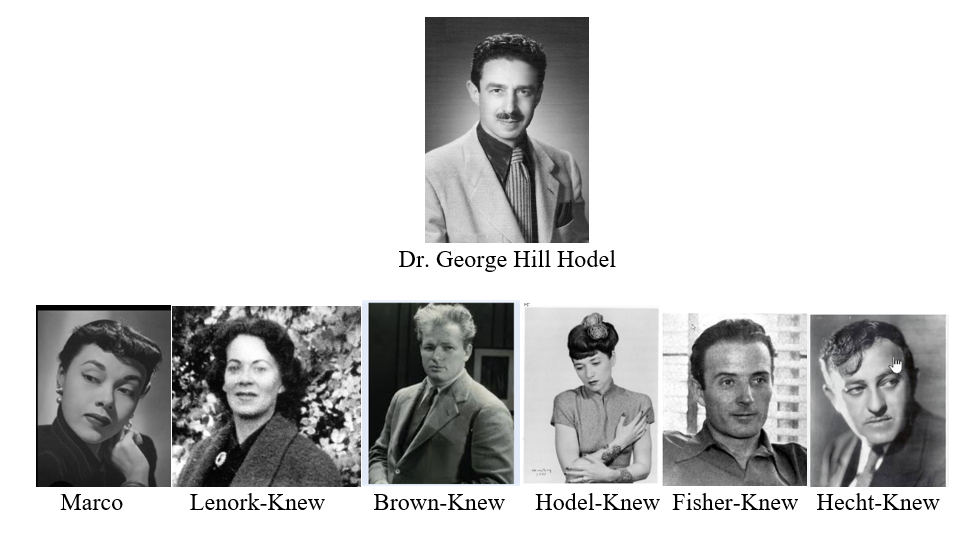
With the discovery of this new linkage we now have a direct connection between George Hodel, Steve Fisher, Ben Hecht and actress Marya Marco.
A photograph from George Hodel’s personal album
A verified actress connected to that photograph
Her documented work in a Steve Fisher screenplay (Song of the Thin Man) released months after the Dahlia murder
Her later appearance in Fisher’s 1949 stage play, written by the same man who publicly declared he knew the Black Dahlia killer’s identity.
One further “Hollywood Connection”-An additional “link to the chain.”
At the same time that screenwriters, Steve Fisher and Ben Hecht were making their separate claims to “knowing the name of the Black Dahlia killer” their were two others standing “behind the curtain” so to speak.
They were:
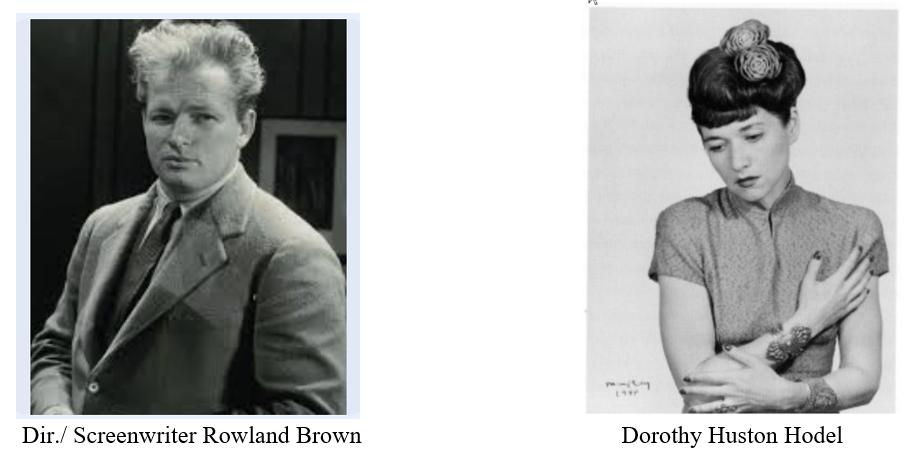
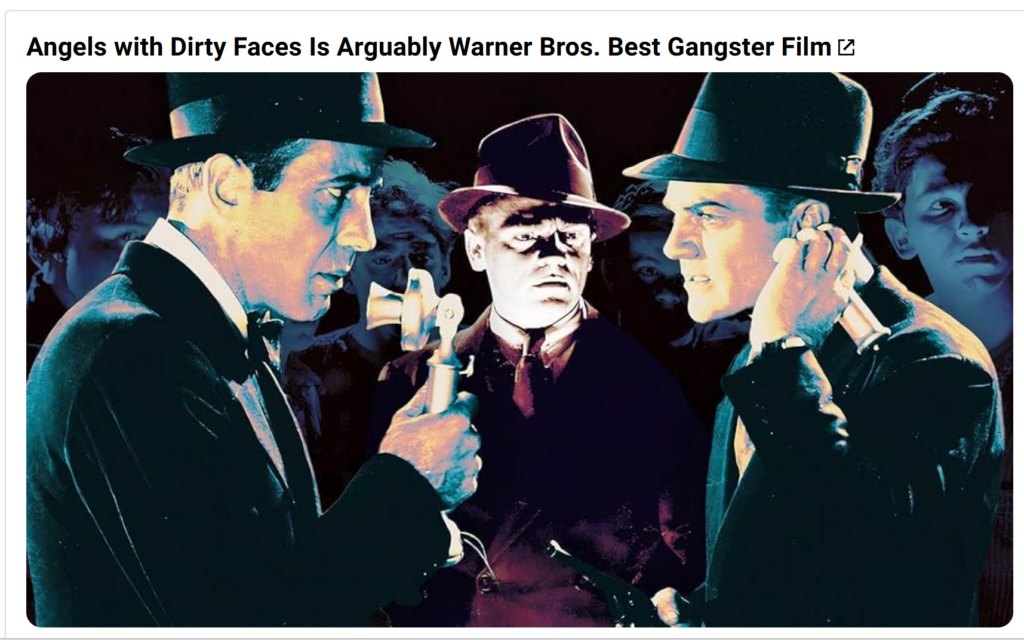
In 1947, at the time of the Elizabeth Short, “Black Dahlia Murder” Rowland Brown was having an ongoing affair with my mother, Dorothy Huston Hodel, who was divorced from George since 1945. Rowland was a Oscar nominated screenwriter (Angels with Dirty Faces) and IMDB names him with 31 film credits.
Rowland Brown was also close friends with fellow Hollywood screenwriters, Ben Hecht and Steve Fisher and was very possibly their “source” on knowing that Dr. George Hill Hodel was the Black Dahlia killer. I have no doubt that my mother would have told her then lover, Rowland Brown that she knew George killed Elizabeth Short.
Rowland Brown’s highly acclaimed film:



Steve, catching up on my reading after a busy 🌲Holiday Season…..whew!! Can you see simolar connections in today’s happenings , names, ongoing political situations? ! Discussing current events with memories of my days living in CA., NY, IL, AZ, now SC, I am reliving many of the same situations, thru the drama & fears with my children, grandchildren &! great grandchild !! It’s a wonderful life, but a dangerous life!! My stomach does not permit the soothing of alcohol nowadays🤣! Yes, there are plenty of Trumpers, Epsteins, Maduros, etc. and those who idolize them! Some who are your close relatives🤣! Ah….but I live the way my Irish & Italian parents, grand parents, cousins, aunts uncles etc. Fight like hell at the holiday get togethers, then hug & make up as we plan for St. Pat’s Day, Easter as life goes on! I do wish we could meet in person one day…..the spirit is willing, the body is travel tired😴! Stay well, stay happy Steve……there’s always that party in the “hereafter” whatever that may be🙄! Here’s to 2026💕🎇!
Patricia O: Thanks. All good here in my NW corner of the USofA. Rima sleeps at my side, life is good.
It is a scary world now, but hoping this year will bring us some relief. I too my slowing way down at 84.
Mind still fairly active, but the body is pretty much in slo-mo. Be great to meet in person, but might have
to be that party in the sky? Happy New Year! steve and rima
Steve……just received a clue as to what awaits in the Great Beyond!! New recipe for a “heavenly” Vodka Martini……not dirty but clean…..vodka, olive oil juice along with the olive (or two), plus 1-2 tsps. of extra virgin high quality olive oil…..gives the martini a “peppery” taste. As I recall your drink of choice is Johnny Walker Black…..Phil will join us for that! And the bartender is James Bond…….now that’s to die for, right😇!? We will not leave “the good times” behind! Party On, Steve……… & Rima too!!🥳😎
I’ll drink to that. We can wing it from there with real wings. Almost over my fear of flying so easy peasy